
Graduating from Railway: Moving to a Platform Where You Own the Infrastructure
Use Cases
Outgrowing Railway? Here's what it looks like to move to a platform where you own the infrastructure, pick your regions, and run hybrid or bare metal.
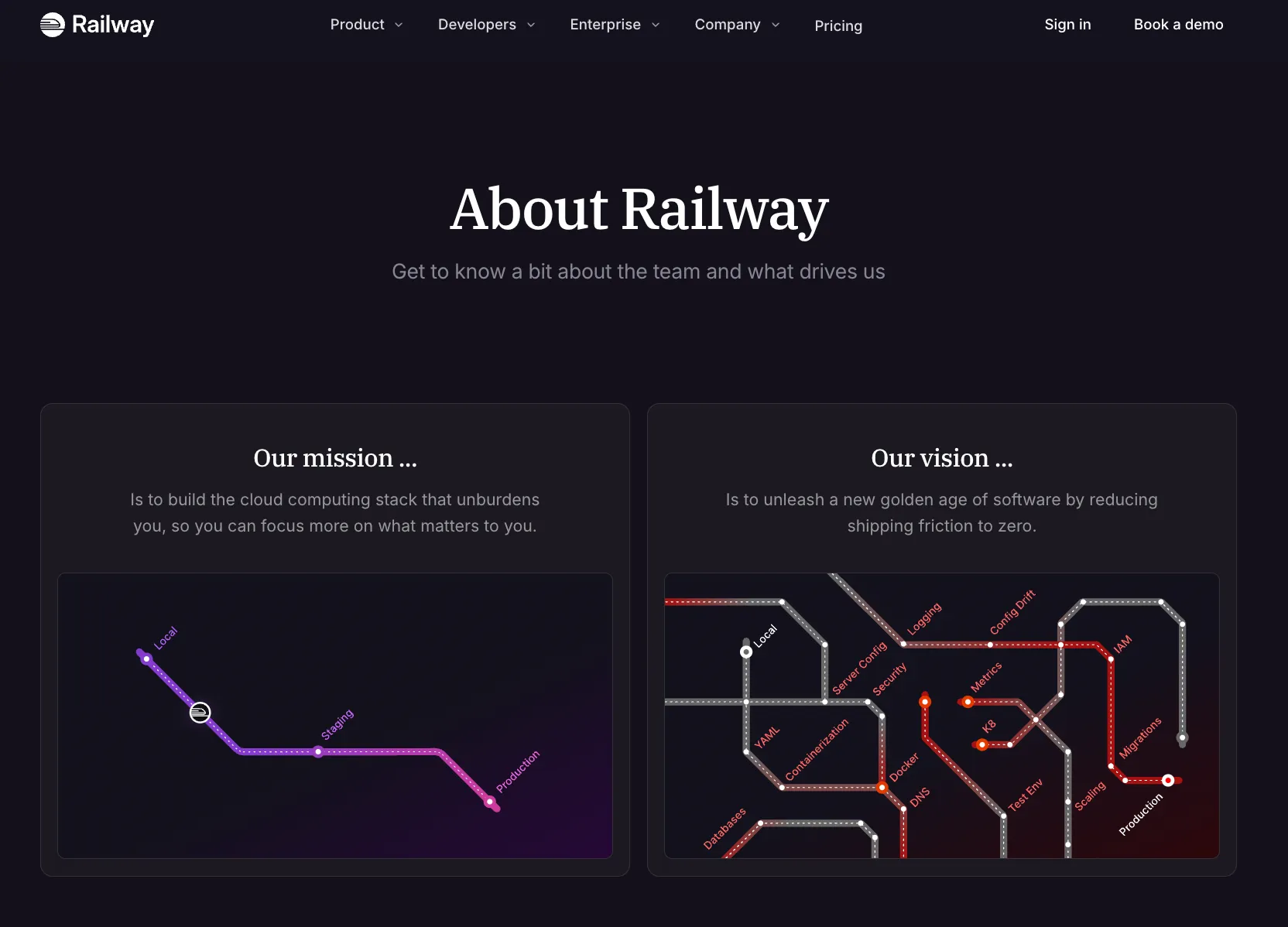
Railway (railway.com) is a hosted platform-as-a-service that builds and deploys apps straight from a Git repo.
Connect a repo, get a URL in minutes. For an early product, that speed matters more than almost anything else. As your app grows into multiple APIs, workers and compliance requirements, the question shifts to who controls where it all runs.
Data residency rules and latency targets don't care what's on the dropdown.
Usage-based pricing is easy to start with, and as your product grows, the bill often climbs well past what you expected at the beginning.
Bare metal, a colo rack or a dedicated on-prem server for a single customer.
Internal tooling, pipelines and environment templates deserve a foundation built for platform engineering.
Enterprise security questionnaires want to know which countries and data centers hold their data, and who can access it.
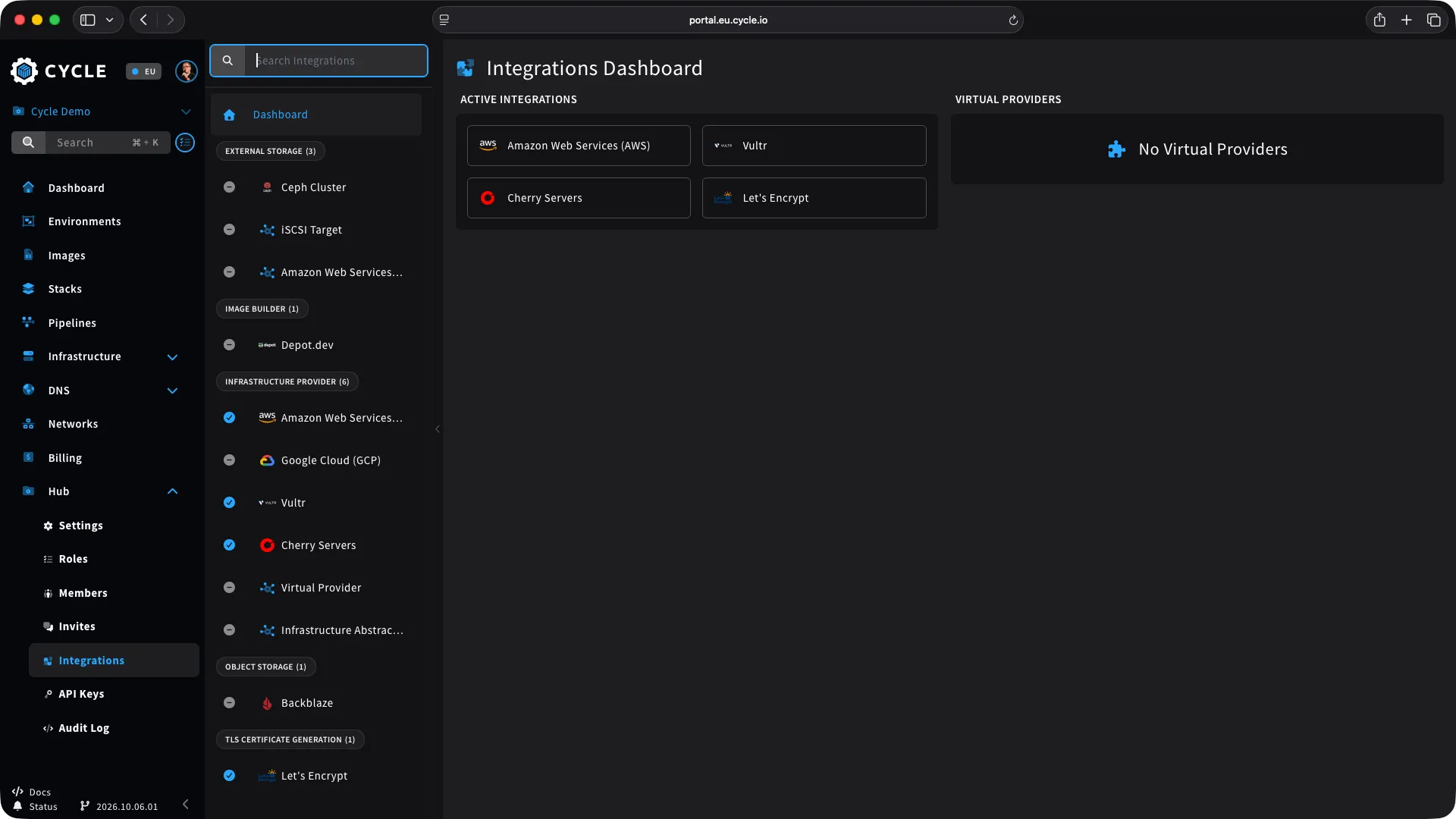
Servers run on your own provider accounts or hardware. If you ever move off Cycle, those servers and your data stay with you.
Deploy anywhere your providers have a location, and pick a North American or European control plane.
One environment can span cloud VMs, dedicated servers and on-prem hardware, all managed the same way.
Dedicated hardware gives you the full machine, and customers moving to colo bare metal have cut costs by up to 45%.
Keep a workflow that feels like a PaaS, on infrastructure you control, without needing a platform team to run it.
Everything here comes integrated and kept current, so your developers stay focused on the product.
Containers, VMs and functions. Run all three on the same infrastructure, so a legacy workload doesn't need a separate system.
Observability and updates. Agentless metrics, logs and events, along with automatic updates, are included too.
Networking and security. An encrypted mesh network, load balancing with a WAF and automatic Let's Encrypt TLS come with far less operational work, and in many cases zero configuration.
Move stateful workloads. Migrate workloads between servers and providers, including stateful containers, with Cycle transferring the data between hosts.
Direct access, no drift. Immutable configuration keeps environments consistent, and a secure console lets you reach your instances when you need to.
Kubernetes is a good option for teams that have a dedicated platform team to run it. For many growing companies, however, taking on controllers, ingress, storage drivers and the relentless upgrade cadence is a lot, just to be able to run on preferred hardware across regions. Cycle provides the same infrastructure flexibility without the operational overhead.
If your services already build from Dockerfiles, you're most of the way there.
Prefer to hand off the setup? With Cycle's Hosted MCP, your AI tool can build the environment for you, and nothing changes until you approve it.
Take a look at how quick and easy it can be to migrate your app from a service such as Railway, although the same principles apply to others, over to Cycle.io using our MCP.

"Cycle lets us take on the flexibility and power of the major clouds on our own timeline, without hiring a DevOps team to operate it yet. Managing a multi-cloud cluster would be a nightmare for us to do it ourselves."

Cycle is the Railway alternative that puts your own servers, regions and hardware within reach of any team, with or without a platform team. We handle the upkeep, from updates to networking, so owning your infrastructure stays low maintenance and your developers stay focused on the product.
Outgrowing Railway? Here's what it looks like to move to a platform where you own the infrastructure, pick your regions, and run hybrid or bare metal.
Today, we're launching a brand new way to interface with the Cycle Platform, that just a year or two ago would have felt entirely like science fiction. Our first ever AI-oriented tooling, Cycle's Hosted MCP, is live today.
Spreading infrastructure across multiple cloud providers can cuts costs and adds resilience, but it also multiplies the work. Cycle gives teams one control plane for multiple providers, no need for Kubernetes or a dedicated platform team.
The usual signals are needing a region Railway doesn't offer, customers asking where their data physically lives, wanting workloads on your own hardware, or a bill that keeps climbing past what you planned. If your team is already building internal tooling and pipelines, that's another sign you'd benefit from a platform designed for it.
Cycle is built so teams can own their infrastructure without one. Updates, networking, load balancing and observability are handled by the platform, and every server is managed from a single control plane, so your developers can stay focused on the product.
Anywhere you have servers: your own accounts with the cloud providers you choose, bare metal from a hosting provider, or hardware in your own rack. A single environment can span all of them, and you can choose whether a North American or European control plane manages your hub.
If your services build from Dockerfiles, they carry over directly, since Cycle runs standard OCI container images. From there you recreate your environment (starting with staging), move your data with a standard dump and restore, and cut over DNS while keeping Railway running briefly as a fallback.
Yes. With Cycle's Hosted MCP, the AI tool you already use can set up environments, provision servers and configure DNS in your hub. You decide whether it gets read, write or exec access, and it shows you a plan and waits for your approval before changing anything.
They stay with you. Your servers run on your own provider accounts or hardware, so moving off Cycle doesn't mean handing back infrastructure or migrating data out of someone else's platform.
This release strengthens the network foundation and adds new capabilities for teams running on Cycle. Inter-node IPsec now rolls encryption keys more often and handles high-throughput links better. The native load balancer responds much faster to route, instance, and DNS changes in large environments. The release also introduces an integrated, highly available message bus for pub/sub within your environments, and External Volumes now support AWS EBS volumes natively. Rounding out the release are HTTP/2 improvements across the load balancer and internal API, simpler traffic splitting, and more control over pipelines and virtual machines.