The conversation
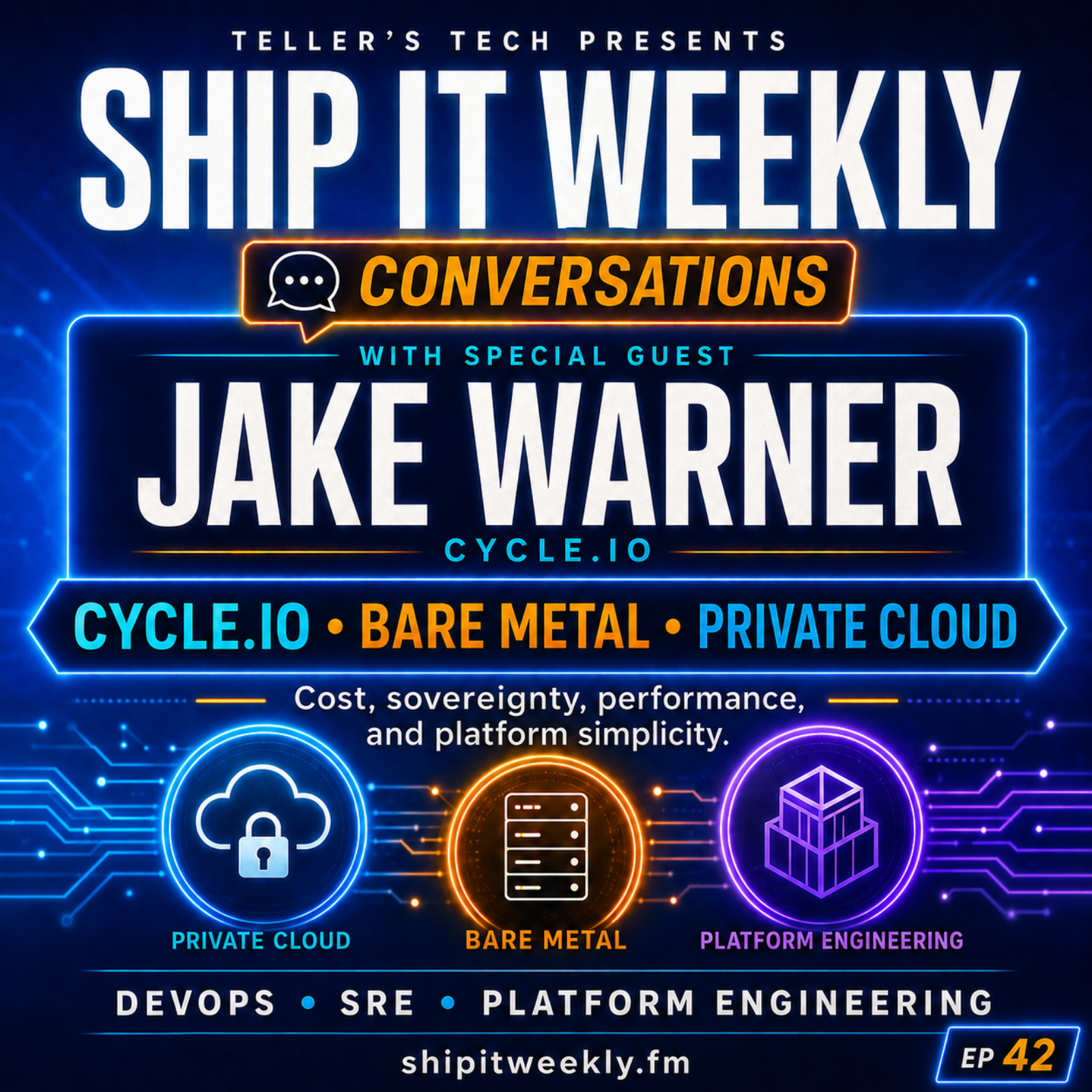
Our founder and CEO, Jake Warner, recently joined Brian Teller on Ship It Weekly to talk about a shift a lot of infrastructure teams are quietly making: rethinking how much cloud and Kubernetes complexity they actually want to carry. The full episode runs about 36 minutes and covers private cloud, bare metal, containers, VMs, hybrid infrastructure, and where opinionated platforms fit into modern DevOps and platform engineering. If you've ever looked at your Kubernetes clusters, Terraform modules, Helm charts, service meshes, and cloud bill and wondered whether all of it is really earning its place, this one is worth a listen.
Why bare metal and private cloud are back on the table
Jake outlined the three forces consistently pulling teams back toward bare metal and private cloud: cost, data sovereignty, and performance. Hyperscaler pricing keeps climbing, and lock-in makes it hard to reverse. Compliance pressure (especially around the US Cloud Act) is pushing European organizations to move off US-owned hyperscalers even when the underlying hardware sits in Europe. And the performance gap between modern bare metal and virtualized cloud compute has widened to the point where platforms like Cycle can deliver a cloud-like experience on raw hardware, at a meaningfully lower cost, without giving up the automation and developer experience that made cloud attractive in the first place.
Playing with infrastructure vs. running it
A recurring theme was the difference between playing with infrastructure and running it. Early on, tweaking knobs is fun. Three months in, nobody wants to maintain it. Jake compared it to going from Android to iPhone: at some point, customizing every variable stops being interesting and you just want something that works. That's the gap Cycle is built for: engineering-heavy teams where developers want to ship applications rather than become full-time DevOps engineers. By treating infrastructure as a pool of resources and applications as "environments as code," teams can bring bare metal, VMs, cloud instances, or VMware hosts, mesh them together, and run containers and VMs side by side without rebuilding everything to adopt a new platform.
Opinionated platforms, containers, and the middle ground
A recurring theme was the difference between playing with infrastructure and running it. Early on, knobs are fun. Three months in, nobody wants to maintain them. That's the gap Cycle is built for: engineering-heavy teams where developers want to ship containers and applications rather than become full-time DevOps engineers. By treating infrastructure as a pool of resources and applications as "environments as code," Cycle lets teams run containers and VMs side by side across bare metal, cloud, private cloud, and hybrid environments , with active-active workloads, application-level replication, and a thin, well-defined line between infrastructure and what runs on top of it.
The bigger takeaway from the episode isn't that cloud is dead or Kubernetes is wrong. It's that infrastructure decisions age, tradeoffs shift, and more teams are looking for a middle ground: more ownership without becoming hardware janitors, predictable cost without rebuilding everything from scratch, and a developer experience that doesn't require a platform engineering army to keep running.
Listen to the full episode: