
Product
CycleOS 2026.11.12.1: Linux Kernel 6.18.63
CycleOS 2026.11.12.1 moves to Linux kernel 6.18.63. It adds six stable point releases of fixes for virtualization, storage, networking and memory handling.
Deep dives into infrastructure primitives, distributed systems, and updates from the team building Cycle.
CycleOS 2026.11.12.1 moves to Linux kernel 6.18.63. It adds six stable point releases of fixes for virtualization, storage, networking and memory handling.

A tour of Cycle's developer experience platform: environments, deployments, tag-based rollbacks, stacks and pipelines, and how they keep your platform stable, visible and predictable.

Multi-tenancy isolation on Cycle: choose shared, segregated, or dedicated tenancy for each customer using clusters and environments, all managed from one control plane.
The latest CycleOS release brings Linux kernel 6.18 and NVIDIA 580 drivers, patching critical CVE-2026-99999 (PwnEscape) and adding CUDA 13 support and better virtualization.

Spreading infrastructure across multiple cloud providers can cuts costs and adds resilience, but it also multiplies the work. Cycle gives teams one control plane for multiple providers, no need for Kubernetes or a dedicated platform team.

Today, we're launching a brand new way to interface with the Cycle Platform, that just a year or two ago would have felt entirely like science fiction. Our first ever AI-oriented tooling, Cycle's Hosted MCP, is live today.

Cycle recently went through a System and Organization Controls (SOC) 2 Type 1 audit and we've got the report. It’s an important step in our continuous commitment to data security and system availability. But are we just checking boxes for the sake of boxes or is there more behind it?

Discover how the newly released Cron function containers empower developers to schedule jobs, batch work, processing, and more with a simple new configuration.
Cycle's EU Control Plane is here. European teams can now keep their data in Europe, work with noticeably lower latency, and stay in full control of where everything runs.
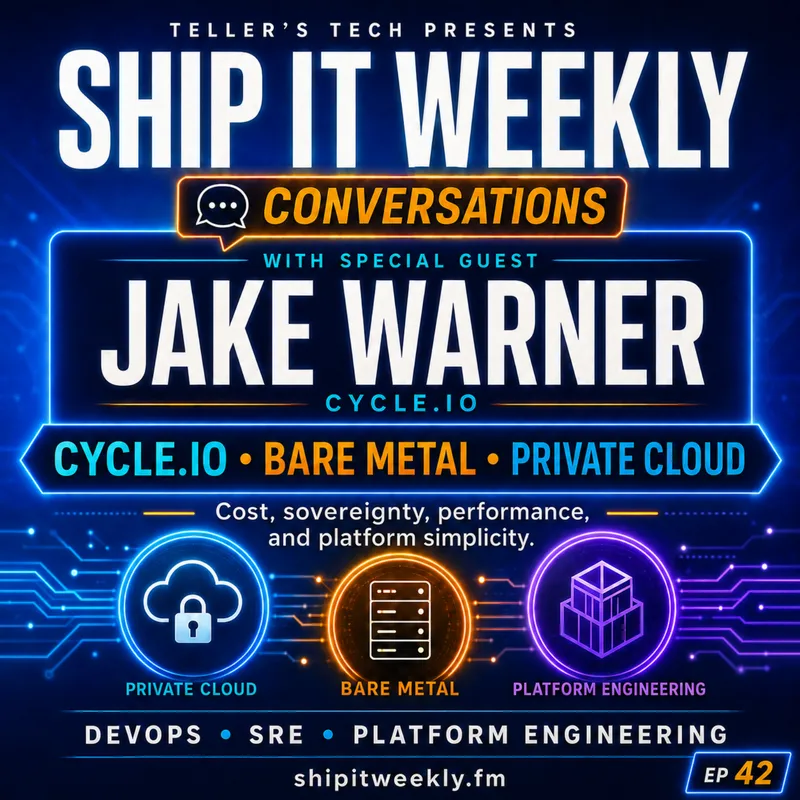
Cycle CEO Jake Warner joins Brian Teller on Ship It Weekly to discuss the resurgence of bare metal and private cloud, Kubernetes fatigue, and why opinionated infrastructure platforms are gaining traction with engineering-heavy teams.

A short, AI-assisted article about why we put an "AI-assisted" badge on AI-assisted articles.

Broadcom’s licensing changes have many teams rethinking their virtualization stack. This guide compares five VMware alternatives, including Cycle, Proxmox, and OpenStack, to help you find the right fit for your infrastructure.

Learn how to identify and troubleshoot high CPU, memory, and disk usage across containers and virtual machines using Cycle's portal. Improve infrastructure stability with clear monitoring and actionable insights.

Cycle's biggest release yet introduces Virtual Providers and support for Virtual Machines—unlocking true hybrid infrastructure and positioning Cycle as a powerful Kubernetes and VMware alternative.

Cycle introduces Server Nicknames — a simple but powerful update that enhances server management across cloud and on-prem infrastructure. Say goodbye to confusing hostnames and hello to clarity, custom naming, and better DevOps workflows. Discover how this small feature makes a big impact.

Most Kubernetes misconfigurations start small but can take down production fast. In this article, we break down the top Kubernetes security risks from the OWASP Top 10, including overly permissive RBAC, outdated clusters, and missing network segmentation. More importantly, we explore how Cycle.io takes a fundamentally different, secure-by-default approach that removes the burden of manual configuration and minimizes the risk of human error.

Kubernetes and Cycle: Exploring networking, security, and scaling in container orchestration.

Federation is more popular than ever with teams pursuing multi-cloud, distributed architectures in order to provide their users a better, more complaint experience. Take a peek into how Cycle approaches federation differently, combining the flexibility of distributed systems with the simplicity of a centrally managed platform.

Lately, we've seen some really creative Cycle platform workflows take shape—things like ultra-dynamic pipelines, smarter SEO routing, and custom TLS setups. In this post, we share some of the best patterns we've come across, straight from real users making the most of Cycle.

Discover the Cycle Toolbox, a growing suite of tools designed to streamline workflows for DevOps professionals and developers. Our initial release features the Docker Compose Converter for seamless migration from Docker to Cycle, the Global DNS Propagation Validator for real-time DNS status insights, and the 'What's My IP' tool for quick IP address retrieval. Keep an eye out for even more tools coming soon!
Get product updates, engineering deep dives, and industry analysis delivered to your inbox once a month. No spam, ever.
This release gives teams more control over who and what can reach their infrastructure. You can now set a security perimeter for your hub using IP CIDRs, turn off the internal API for individual containers, and keep secret scoped variables hidden unless a role has been granted access to them. Behind the scenes, hosts running thousands of containers start up faster, the native load balancer handles much more UDP traffic, and autoscaling responds faster to changing demand. The portal adds a Servers tab for clusters, extended storage pool metrics, advanced seccomp settings, and an instance console you can pause and search.